REGULATORY
Canada Draws a Line on Carbon Prices
Canada and Alberta sign a binding deal setting carbon prices, credit floors, and government backstops for industrial emitters through 2040
4 Jun 2026
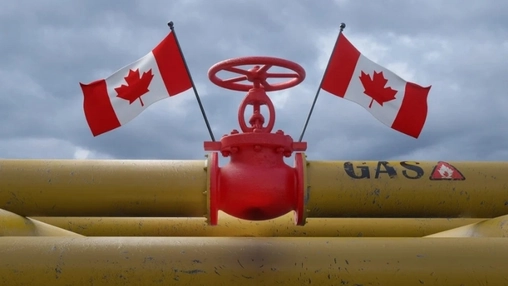
For years, Canada's carbon capture industry has nursed a familiar grievance: the economics worked, in theory, but no government commitment lasted long enough to justify the capital. On May 15th, 2026, Ottawa and Alberta moved to close that gap, signing a formal agreement that locks in the rules of Canada's industrial carbon market through 2040.
The framework is built around Alberta's TIER compliance system. Carbon prices under TIER will rise from $95 per tonne today to $130 by 2035, then $140 by 2040. Every major industrial carbon scheme in Canada will align to that schedule, creating a single national benchmark for large emitters.
A credit floor, new to the agreement, guarantees that no TIER credit may trade below $60 per tonne from 2030, rising to $110 by 2040. For developers of long-cycle capital projects, this resolves a structural problem that has complicated financing for years: the risk that credit values could collapse before a facility recovered its costs.
To backstop project economics further, each government commits $600 million in contracts for difference, covering 75 million tonnes of emissions reductions through the decade. Similar instruments have mobilised offshore wind and clean hydrogen capital in other markets.
A joint target of 16 million tonnes of captured CO2 per year from the Pathways Project, Alberta's large-scale oil sands initiative, was reaffirmed. At least six million tonnes must be operational by 2035. A trilateral memorandum with Pathways companies is expected to follow shortly.
Sceptics have noted that $130 per tonne by 2035 falls well below the $170 figure once written into federal law. Proponents counter that a credible, durable framework draws more real capital than an ambitious number carrying political risk. Both are probably right.
Certainty through 2040 is now on paper. For a sector that has stalled repeatedly at final investment decision, structural clarity may matter more than any individual credit rate. Capital ready to deploy now has a framework durable enough to build around.
Related News


SUBSCRIBE FOR UPDATES
By submitting, you agree to receive email communications from the event organizers, including upcoming promotions and discounted tickets, news, and access to related events.